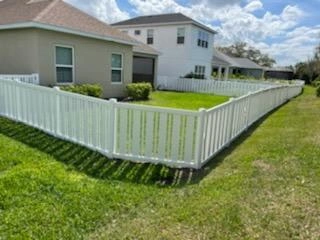
Yes, if your property is located in unincorporated Manatee County, installing a fence generally requires a permit. Manatee County lists fences as a standard permit type and requires building plans along with a site plan or property survey as part of the application.
That sounds straightforward, but several details can complicate the process. Your property’s jurisdiction, fence location, community restrictions, easements and intended fence height can all affect what must happen before installation begins.
This is particularly important in Lakewood Ranch, where properties may be located in Manatee County or Sarasota County and many neighborhoods have their own architectural requirements. A county permit and an HOA approval are also two separate things. Receiving one does not automatically satisfy the other.
Planning these details before materials are ordered can prevent delays, redesigns and the expensive mistake of installing a fence in the wrong location.
Posted on Google
 bobby fisher
Trustindex verifies that the original source of the review is Google.
Finest fince install in manatee countyPosted on Google Jeff MisiorowskiHad a wonderful experience with Quality Fence on our project. Lee was always very responsive and patient. Delivered the project on a time and as agree upon meeting and exceeding all expectations. Want a great fence contractor? Call LeePosted on Google
 Carla FavoriteQuality Fence did a wonderful job on my fence. They were quick and efferent! Lee was very professional and friendly and his crew did a great job! Very happy with how everything turned out. I would definitely recommend Lee and his team!Posted on Google
 Brad StarksDid a great job on our fence. And the price was lower than I expected.Posted on Google
 Olivia LopezThis is a down to earth & honest company. Lee always kept us informed of all the progress and timeline for our fence project to be completed. The fence installers were pleasant & hard working. The price of our fence project was very fair. We are extremely pleased with the results! Thank you Lee & company. Job well done! Do not hesitate in hiring this company for any fencing project!Posted on Google
 Missina CuttingWonderful company to work with. Got my new fence up less than one week after the hurricane & did it fast. Fence looks great, stable & quality materials. The owner Lee communicated with me personally in a friendly & professional manner & I highly recommend them for all your fence needs!Posted on Google
 Britney BurnsWonderful experience! Very professional, quick, responsive, and great pricing!Posted on Google
 Thomas VThanks to Lee and his crew at Quality Fence of Manatee! I requested a 15'x50' kennel structure with 6' chainlink. All the material was upgraded to commercial strength because of the size of my LGD's. He coordinated seamlessly with a concrete contractor to create a product that will last decades. I am a very satisfied customer and I couldn't recommend this company enough, God bless and Semper Fi!Posted on Google
 Amy DavisLee, his wife, and his crew were phenomenal during the entire project! He had our entire fence put up in a timely manner, complete with hardware. If we voiced any concerns, Lee took care of us immediately. We also had a concrete project being competed and Lee worked with the other contractor to ensure the entire project was seamless. (Shout out to Caleb with East Manatee Concrete and Masonry). I would highly recommend Lee and his team!Posted on Google
 Ina SchielkeThank you Lee and team for accommodating us quickly and getting us a 40' x 40' chain link fenced in area in the backyard for our new puppies. We waited way too long on another company to just get an estimate together. That's when I called Quality Fence of Manatee. Lee responded the same day, sent the proposal the next morning, and the fence was installed the following day, and it looks great. Don't hesitate to call this company for your fencing needs. Trying to add photos, but they keep getting rejected, will try again later.
When Is a Fence Permit Required in Manatee County?
For properties within unincorporated Manatee County, a permit is generally required before installing a new fence. The county’s current building permit requirements identify a fence as a standard permit and list building plans and a site plan or survey as required documents.
Homeowners and registered contractors can submit applications through the Manatee County Online Services Portal. The portal can also be used to pay applicable fees and track an application as it moves through the review process.
A permit may be necessary when:
- Installing a fence where one does not currently exist
- Replacing an existing fence
- Changing the location, height or configuration of a fence
- Adding gates or modifying access points
- Installing fencing around a swimming pool
- Building a fence on a commercial property
The requirements may vary according to the property and project. A straightforward backyard fence and a pool barrier, for example, are not necessarily reviewed under the same standards.
Before assuming that a repair or partial replacement is exempt, confirm the project requirements with the appropriate permitting authority.
First, Determine Which Government Has Jurisdiction
One of the most common sources of confusion is the difference between a mailing address and the government responsible for permitting the property.
A Bradenton mailing address does not necessarily mean the property is inside the City of Bradenton. It may be located in unincorporated Manatee County. Similarly, Lakewood Ranch extends across both Manatee and Sarasota counties.
Depending on the property, fence requirements may be administered by:
- Manatee County
- Sarasota County
- The City of Bradenton
- The City of Sarasota
- Another incorporated municipality
This distinction matters because each jurisdiction may have different application procedures, zoning standards and fence restrictions. Before starting the project, verify the property’s jurisdiction rather than relying solely on the city shown in its mailing address.
What Documents Are Needed for a Manatee County Fence Permit?
Manatee County currently identifies building plans and a site plan or survey as required documents for a standard fence permit. Additional documentation may be requested depending on the property or project.
The site plan or survey allows reviewers to understand where the fence will be placed in relation to:
- Property boundaries
- The home and other structures
- Streets and sidewalks
- Drainage and utility easements
- Bodies of water
- Rights-of-way
- Corner visibility areas
- Pools and other restricted areas
The fence plan should accurately show the proposed layout, gates and other relevant project details. Incomplete or unclear plans can delay review because the permitting department may need additional information before approving the application.
A professional fence company can help identify the information needed for the proposed installation, but the governing authority makes the final determination regarding permit approval.
A Fence Permit Is Not the Same as HOA Approval
Many Lakewood Ranch, Bradenton and Sarasota communities have homeowners associations or architectural review committees. These organizations may regulate fence materials, colors, heights, styles and placement.
A local government permit confirms that the project has been reviewed under applicable public regulations. HOA approval confirms that the fence complies with the private rules governing the community.
Homeowners may need both approvals before installation.
For example, the county may allow a certain type of fence, while a community association may restrict homeowners to a specific aluminum design or vinyl color. Some neighborhoods prohibit fences in front yards, require landscaping around certain fence sections or limit fencing near ponds and preserve areas.
Do not order materials based only on a neighbor’s fence. Community standards can change, and different lots within the same development may be subject to different restrictions.
Why a Current Property Survey Matters
A property survey is one of the most important documents involved in planning a fence. It provides a professional representation of the property boundaries and may identify easements, structures and other conditions that affect placement.
Many homeowners assume the edge of the lawn, an existing hedge or a neighbor’s fence marks the property line. Those features are not reliable substitutes for a survey.
Installing a fence outside the property boundary can lead to neighbor disputes, permitting problems and relocation costs. Placing it inside a utility or drainage easement can also create complications if the area must be accessed later.
Can a Fence Be Installed in an Easement?
An easement does not necessarily change who owns the land, but it may give a utility provider, drainage authority or another party the right to access part of the property.
Whether fencing can be placed within a particular easement depends on the type of easement and the rules that apply to it. Even when fencing is allowed, the property owner may be responsible for removing or repairing it if access is required.
This is why easements should be reviewed before the final fence line is established.
Fence Height and Placement Can Affect Approval
Fence height is not simply a design preference. Local zoning regulations commonly treat front, side and rear yards differently, and additional restrictions may apply near intersections, driveways, waterfront areas and swimming pools.
A six-foot privacy fence may be appropriate in part of a backyard but unacceptable in an area where it interferes with required visibility. Corner lots often require particularly careful planning because a fence can affect the sightlines of drivers, cyclists and pedestrians.
Gates also need to be considered. Their placement should provide practical access without interfering with sidewalks, neighboring property or required clearances.
The goal is not merely to fit a fence onto the lot. It is to create a layout that provides the desired privacy, security or containment while remaining consistent with the property’s legal and physical limitations.
Pool Fences Have Additional Safety Requirements
A fence used as part of a residential swimming pool barrier has a more serious responsibility than a standard decorative or privacy fence. Its height, openings, gates and locking features may all be governed by applicable safety requirements.
Pool gates generally need to operate in a manner that helps prevent unsupervised access. The fence design must also avoid openings or features that would undermine the barrier.
Do not assume that every residential fence is automatically suitable for use around a pool. A fence may work well along a property line while failing to satisfy pool barrier requirements.
The entire pool enclosure should be planned around the applicable building and safety standards before installation.
Utilities Should Be Located Before Fence Installation
Fence posts extend below ground, which means underground utilities must be considered before digging begins.
Florida homeowners and contractors can contact Sunshine 811 before excavation so member utility operators can identify underground public lines near the planned work area. This can help prevent property damage, service interruptions and serious injuries.
Utility markings do not establish private property boundaries. They also may not identify privately installed lines such as irrigation, landscape lighting, pool equipment connections or utilities running to detached structures.
A proper fence plan accounts for both public utility markings and known private systems on the property.
What Happens If You Install a Fence Without a Permit?
Installing a fence without a required permit can create problems long after construction is complete.
The local authority may require the property owner to apply for an after-the-fact permit, provide additional documentation, correct noncompliant work or relocate the fence. If the existing installation cannot be approved, part or all of it may need to be removed.
An unpermitted fence can also become an issue when selling the home. Buyers, inspectors or title professionals may discover that the improvement does not match available permit records.
Beginning with the correct approvals is usually far easier than trying to legalize or rebuild a fence after installation.
How to Prepare for a Fence Installation in Manatee County
A successful fence project begins before the first post hole is dug.
Start by confirming the government with jurisdiction over the property. Obtain a current survey and review it for property lines and easements. If the home belongs to an HOA, request its current fence guidelines and architectural application.
Next, determine the fence’s purpose. Privacy, pool safety, pet containment, waterfront visibility and decorative improvement can each point toward a different material or layout.
Once those details are understood, the fence can be designed around the property rather than forcing a standard layout onto a lot where it may not work.
For homeowners comparing options, Quality Fence Company can help evaluate a property and recommend a fence suited to the home, community and Southwest Florida environment.
Plan Your Manatee County Fence Project with Confidence
Permits, surveys and community approvals may not be the most exciting parts of installing a fence, but they protect the investment you are making in your property. Handling them correctly helps keep the project moving and reduces the likelihood of placement disputes, rejected applications or expensive changes.
Contact Quality Fence Company to discuss your fence installation in Lakewood Ranch, Bradenton, Sarasota or a surrounding community. Our team can help you evaluate your options and plan a fence that fits your property, goals and local requirements.
Frequently Asked Questions About Fence Permits in Manatee County
A replacement fence may still require a permit, particularly when the original fence is removed and rebuilt. Confirm the requirements with Manatee County or the authority responsible for your property before beginning work.
Many Lakewood Ranch communities require architectural or HOA approval. The exact rules depend on the neighborhood. HOA approval is separate from any county permit required for the project.
Manatee County lists a site plan or survey among the required documents for a standard fence permit. A current survey also helps prevent the fence from being installed across a property line or within a restricted area.
The acceptable location depends on applicable zoning regulations, easements and community restrictions. The property line should be verified using a survey before the fence layout is finalized.
Possibly, but restrictions and removal obligations may apply. Review the recorded easement and confirm the requirements with the appropriate authority before planning a fence within it.
Not necessarily. Some homes with Bradenton mailing addresses are located in unincorporated Manatee County. Verify the property’s jurisdiction before submitting a permit application.
That depends on the company and the project agreement. Ask who will prepare the plans, submit the application, respond to requests from reviewers and arrange any required inspections before signing a contract.
Processing time can vary according to application volume, project complexity and whether the submission is complete. Accurate plans and a clear site plan can help prevent avoidable delays.