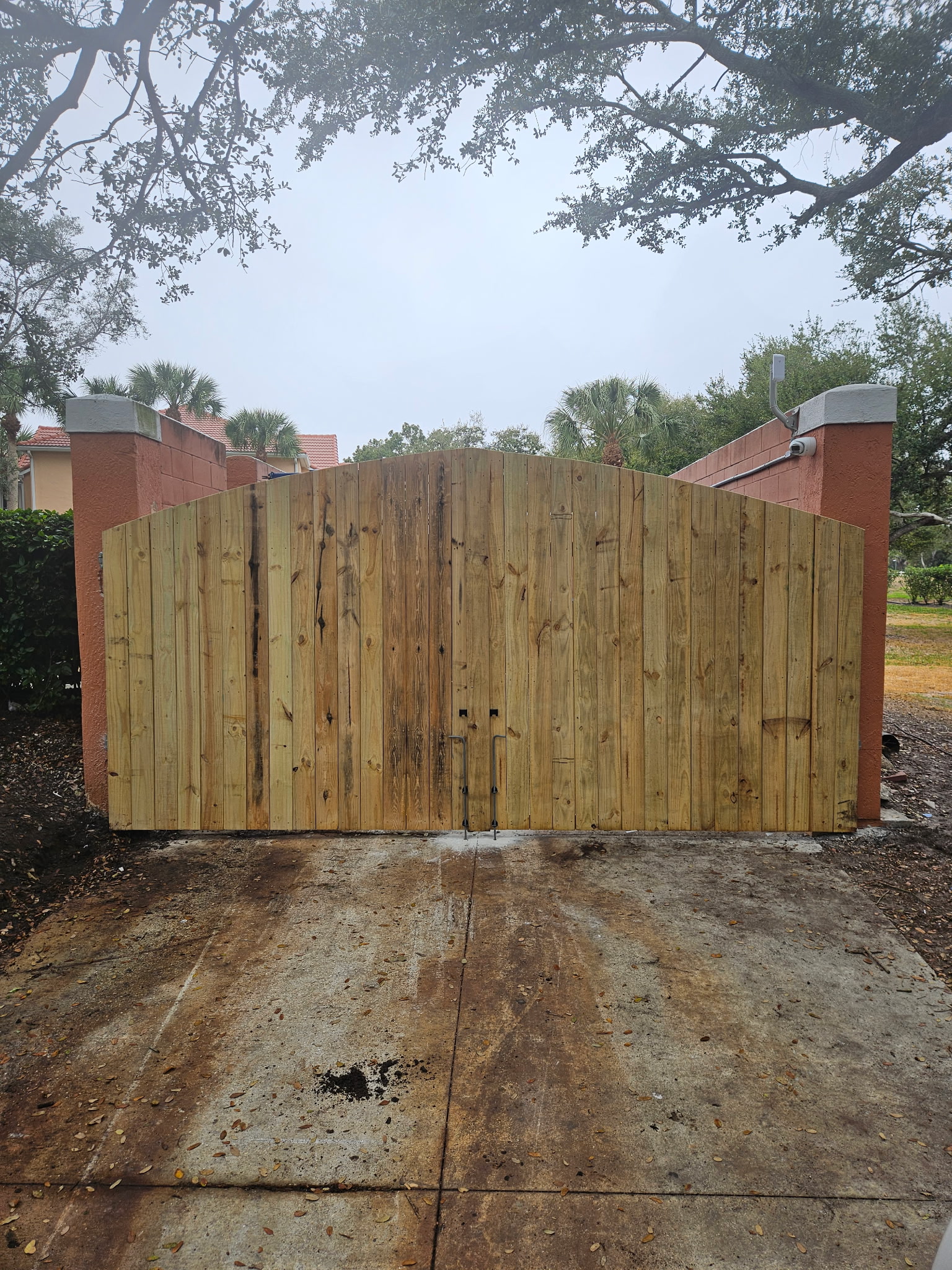
A gate that needs to be lifted every time it closes is telling you something has moved. The problem may be in the gate frame, the hinges, the supporting post or the ground beneath the swing. Adjusting the latch alone can hide the symptom while leaving the cause in place.
For Lakewood Ranch, Bradenton and Sarasota homeowners, the useful first step is to describe exactly what the gate does. Does the latch miss? Does the bottom scrape throughout the swing or only in one spot? Did the change follow a storm, landscape work or an impact?
Those details help narrow the repair.


 Trustindex verifies that the original source of the review is Google.
 Trustindex verifies that the original source of the review is Google.
 Trustindex verifies that the original source of the review is Google.
 Trustindex verifies that the original source of the review is Google.
 Trustindex verifies that the original source of the review is Google.
 Trustindex verifies that the original source of the review is Google.
 Trustindex verifies that the original source of the review is Google.
 Trustindex verifies that the original source of the review is Google.
 Trustindex verifies that the original source of the review is Google.
 Trustindex verifies that the original source of the review is Google.
Separate a Latch Problem From a Support Problem
The latch is where you notice the inconvenience, but it is not necessarily where the problem starts. A gate relies on its frame and hinges to hold its shape and on its post to carry the load.
If the opening appears uneven, the latch-side corner hangs low or the hinge attachment has visibly shifted, moving the latch may only make a misaligned gate close temporarily. The underlying support still needs evaluation.
Observe from a safe position without pulling on an unstable post or lifting a heavy gate. Keep children and pets away from an opening that no longer closes securely. A gate that is close to falling needs prompt professional attention.
What the Gate's Movement Can Tell You
A gate that rubs in one place may have a different problem from one that drags through its entire arc. Soil, mulch, a raised paver or a changed landscape edge can reduce clearance even when the gate itself has not changed shape.
Notice whether nearby fence sections lean or the gap at the hinge post has changed. A wider fence movement calls for a broader assessment than replacing one piece of hardware.
If the gate works differently after wet weather, record that pattern. Do not immediately cut material off the bottom. Changing the gate before identifying the cause can leave an unnecessary gap while the original support problem remains.
Photos of the full opening, hinge side, latch and scraping point can make a repair inquiry more useful. Include a short video only if the gate can be operated safely.
The Repair Must Match the Gate Material
A wood gate, vinyl gate and aluminum gate may look similar from a distance, but their construction and hardware differ. The repair needs to fit the product and the material holding the fasteners.
On a wood gate, the condition of the frame and attachment points matters as much as the hinge itself. On a manufactured vinyl or metal system, use the appropriate hardware and adjustment method rather than assuming a general repair kit will fit.
Manufacturer instructions illustrate why model-specific guidance matters. For example, Trex’s gate adjustment instructions describe adjustments for its own hardware. That document is an example of a product-specific process, not a universal procedure for every fence.
Ask the repair contractor to explain whether the gate needs adjustment, replacement hardware, frame work or a post repair. Each addresses a different source of movement.
Why a Quick Fix May Not Last
A new latch cannot stabilize a failing support post. Tightening a screw will not necessarily restore an attachment point that has lost its ability to hold. Adding a brace also does not solve every gate problem.
The right question is not simply whether the gate can be made to close today. Ask what will carry its weight afterward and whether the repair addresses the reason it moved.
That discussion is especially useful for a wide opening or a heavy privacy gate. Tell the contractor how the opening is used, including mower access or regular equipment deliveries. A repair should preserve the access you need without relying on someone lifting the gate every time.
Quality Fence Company offers residential fence repair, including gate and hardware work. An assessment can help distinguish an isolated gate repair from damage involving the surrounding fence.
Treat Pool and Automatic Gates as Special Cases
A dragging pool-access gate is more than an everyday inconvenience if it no longer closes and latches as intended. Do not prop it open to make access easier.
The U.S. Consumer Product Safety Commission's pool barrier guidance describes self-closing, self-latching pedestrian gates as part of a protective barrier. Keep children away from the pool area and arrange prompt repair if that function fails. Barriers also do not replace active supervision.
A powered gate introduces moving machinery and electrical components. Do not reach into an operator, bypass a sensor or repeatedly force it through a jam. Explain the fault to a qualified automatic-gate service provider and follow the equipment's instructions for taking it out of use safely.
What to Ask Before Approving the Repair
Request a scope that identifies the affected components. “Fix gate” leaves more room for misunderstanding than a description of the post, hinges, frame, latch and any surrounding fence work.
Ask whether replacement parts match the existing system and whether nearby damage could affect the result. If the appearance will change, discuss that before work begins. Community approval requirements may also matter when replacing a gate or changing its design; confirm what applies to your property.
Before the job is finished, ask for a demonstration of the full swing and latch operation. The gate should function without an improvised lifting routine. For a pool barrier or powered system, ask what specific operating checks were completed.
Frequently Asked Questions
Not necessarily. The fault may be limited to the gate or its supporting components. A repair assessment should consider the condition of the adjacent fence before recommending replacement.
Identify the cause first. Trimming may not correct a leaning post or distorted frame and can change the opening in ways you did not intend.
No, a kit must suit the gate’s construction and actual problem. It cannot restore a deteriorated post or compensate for every hardware failure.
The ground clearance may have changed. Point out new mulch, paving or grading so the contractor can compare the gate’s movement with the altered surface.
No, an open gate defeats that part of the barrier. Keep children away from the pool area and arrange a prompt repair that restores the intended closing and latching function.
Restore Reliable Gate Access
If your gate drags, sags or no longer latches, contact Quality Fence Company for an assessment in Lakewood Ranch, Bradenton or Sarasota.
Share the gate material, photos and the changes you noticed so the conversation can focus on a repair that addresses the cause!